 Facebook
 Instagram
 Twitter
 Linkedin

Introduction
For the past two centuries, technology has driven human innovation—from horse-drawn carriages to jet planes, and from room-sized computers to 12-inch laptops. Today, we are on the brink of another technological peak: the metaverse, a transformative innovation that promises to reshape how humans interact with the world and each other.
The rise of the metaverse is prompting businesses, educational institutions, and other sectors to explore its integration. What was once science fiction is now a tangible force with the potential to revolutionize human society. While it offers exciting possibilities, the metaverse also introduces new challenges. This article explores its implications, challenges, and potential benefits.
Defining the Metaverse
The term “metaverse” comes from Greek: meta (beyond) and verse (universe), meaning “beyond the universe.” Neal Stephenson first used it in his 1992 novel Snow Crash.
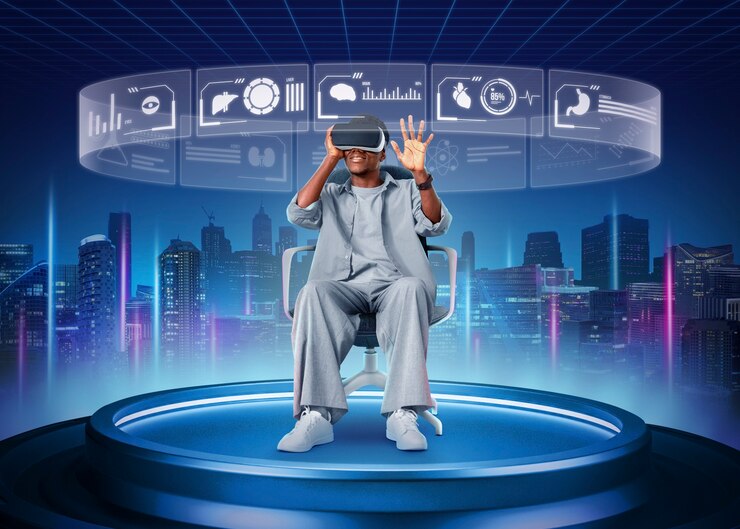
The metaverse is a virtual space where users can interact with computer-generated environments, socialize, and experience a blend of real and virtual worlds. It provides a 3D universe powered by virtual reality (VR) and augmented reality (AR), enabling experiences and experiments that are impossible in real life.
Implications for Human Society
Metaverse integration has the potential to reshape work, education, social interactions, and entertainment:
Work
Virtual offices and immersive meetings could enhance productivity, break down geographic barriers, and create a more connected global workforce.
Education
Students could explore historical events, conduct virtual experiments, and engage in interactive simulations, transforming the learning experience.
Social Life
People can connect beyond physical and cultural boundaries, enjoying virtual tourism, gaming, and experiences otherwise impossible in real life.
Challenges in Metaverse Integration
Despite its potential, the metaverse introduces challenges:
Privacy
Immersive platforms raise concerns about data security and misuse of personal information. Balancing innovation with privacy protection is essential.
Ethics
Virtual harassment, crime, and other unethical behaviors must be addressed to ensure a safe and inclusive cyber environment.
Digital Divide
Equitable access is crucial to avoid widening existing inequalities and creating a technological elite.
Potential Benefits of Metaverse Integration
The metaverse offers wide-ranging benefits across sectors:
Healthcare
VR applications can enable remote consultations, surgical simulations, and therapy sessions, reducing the strain on traditional healthcare systems.
Entertainment
Immersive experiences redefine gaming, movies, and live events. Virtual concerts, sports, and interactive gaming are expanding creative possibilities and democratizing content creation.
Economic Opportunities
Virtual real estate, digital assets, and blockchain integration facilitate secure transactions, opening new avenues for entrepreneurship and innovation.
Final Notes
The metaverse is no longer a distant concept—it is a rapidly evolving reality with transformative potential. While challenges like privacy and ethics must be addressed, the benefits of metaverse integration are undeniable.
From revolutionizing remote work and education to creating new economic and entertainment opportunities, the metaverse is poised to redefine human interaction in the digital realm. Prioritizing inclusivity, ethical practices, and responsible innovation will ensure the metaverse enriches society rather than exploits it.



 Case studies
 Career