 Facebook
 Instagram
 Twitter
 Linkedin


The Metaverse has rapidly emerged as a transformative space for innovation, offering immersive experiences that have captured global attention.
At the core of this technological advancement is virtual twin technology, which creates realistic digital replicas of real-world entities. From economic sectors to virtual education, industries are leveraging the Metaverse to enhance productivity. Soon, Metaverse technology will play a significant role in everyday life.
But how do the Metaverse and virtual twin technology intersect, and how will virtual twins reshape the virtual world? This article explores virtual twin technology and the Metaverse and how they complement each other.
Understanding Virtual Twin Technology
Virtual twin technology involves creating a digital model of a physical object, system, or process that can be tested and analyzed in a risk-free virtual environment. By relying on IoT devices and CAD models, the digital twin stays up-to-date with real-world conditions, allowing industries to optimize performance, predict outcomes, and reduce costs.
Practical Applications of Virtual Twin Technology
Healthcare
Virtual twins in healthcare allow doctors to visualize and predict surgical outcomes, test drug effects, and identify optimal treatment plans, reducing risks and improving patient outcomes. Virtual twin technology is transforming patient care by offering safer and more effective medical solutions.
Automotive
In the automotive industry, 95% of crash tests are now performed on virtual twins. Engineers use virtual twins to create 3D prototypes, conduct simulations, and detect potential vehicle issues early, improving safety and efficiency.
Manufacturing
Manufacturers utilize virtual twins for product design, simulation, and production line optimization. The technology enhances productivity, reduces errors, and lowers operational costs.
Defining the Metaverse
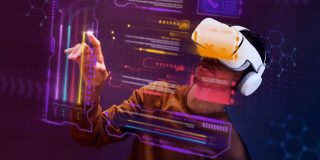
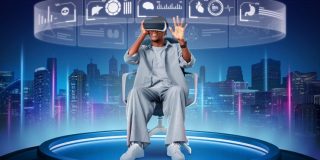
The Metaverse is an immersive virtual space where users interact using augmented reality (AR), virtual reality (VR), and the internet. Users engage in real-time experiences, often through avatars, representing themselves in digital form.
The Metaverse has grown immensely popular, with platforms like Meta envisioning widespread adoption within the next decade. Various sectors, including gaming, education, and corporate industries, are seeking metaverse development companies to enhance user experiences.
Virtual Twin Technology and the Metaverse
Virtual twin technology enhances the Metaverse by making it more immersive, interactive, and personalized. Key benefits include:
Avatar Virtual Twin
Virtual twins improve avatars by making them dynamic representations of real-world actions, behaviors, and expressions, enhancing social interaction and realism in the Metaverse.
Enhanced Virtual Interaction
By accurately representing physical objects and environments, virtual twin technology brings virtual spaces closer to reality, improving user engagement and interaction.
Real-Time Dynamics
Integration of real-time data ensures responsive virtual environments. Avatars and virtual objects reflect real-world changes, creating a lifelike experience.
Seamless Platform Integration
Virtual twin technology allows users to move smoothly across interconnected virtual spaces, ensuring a cohesive and immersive Metaverse experience.
Predictive Analytics
By leveraging real-time data from virtual twins, users can predict future events or outcomes, enhancing planning and decision-making within the Metaverse.
Key Takeaways
The Metaverse is set to be a game-changer for various industries. Integrating virtual twin technology enhances avatars, provides realistic virtual spaces, ensures dynamic interactions, and enables predictive insights. Together, these technologies are redefining the way we experience the digital world.
 Case studies
 Career